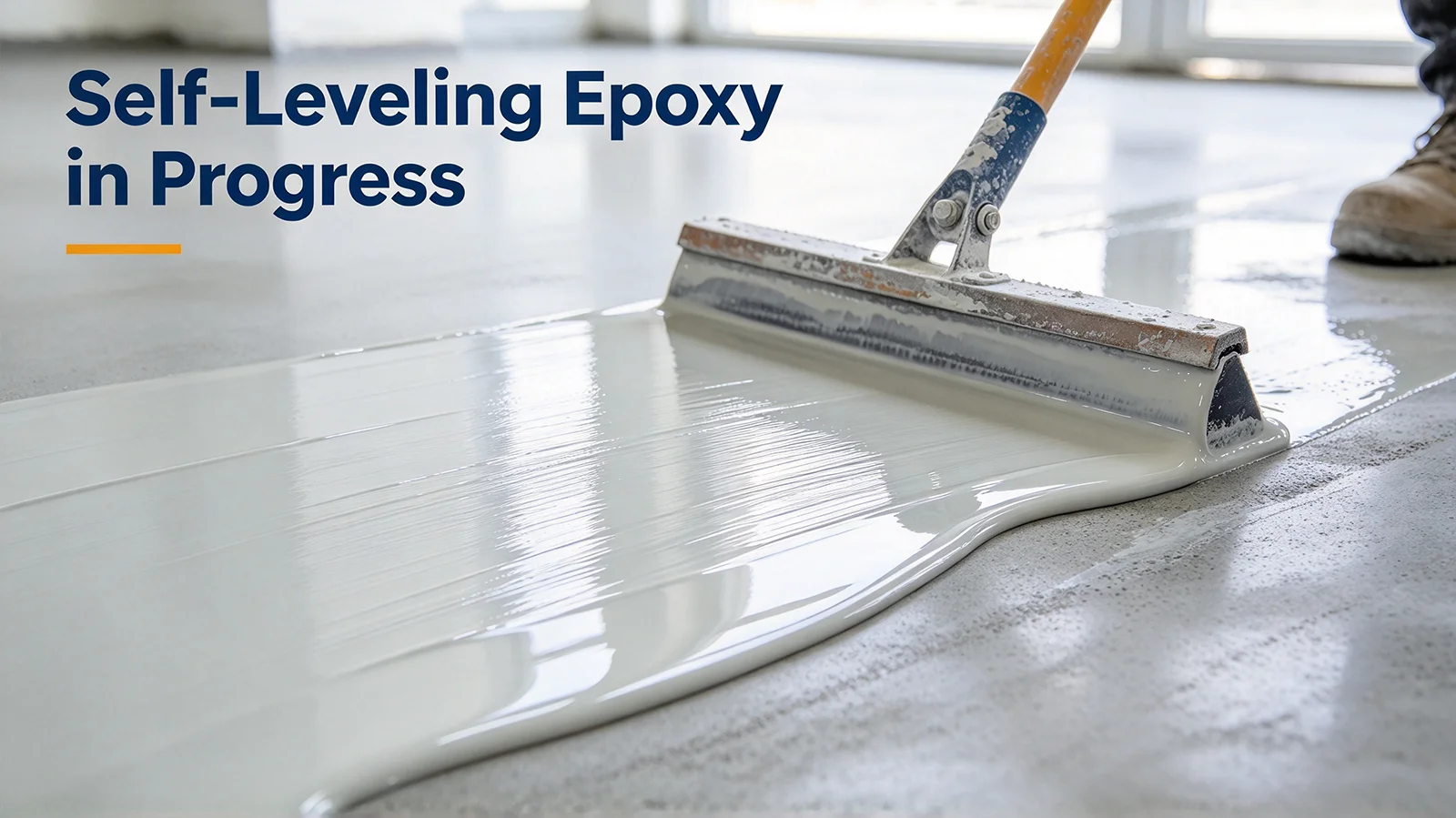
Epoxy floors are favored for their durability and beautiful appearance, but many DIY users encounter peeling, bubbling, and flaking problems after construction. These issues do not mean poor product quality; most of them are caused by incorrect construction operations and improper base surface processing. Mastering the common causes and targeted solutions can effectively avoid epoxy floor failure and extend the service life of the floor.
The first and most common cause is incomplete base surface treatment. If the floor has residual dust, oil stains, wax layers, or loose old paint, the epoxy coating cannot adhere firmly to the base surface, resulting in poor adhesion and eventual peeling. In addition, excessive moisture in the cement floor is a key factor for bubbling and peeling. The water vapor inside the substrate will evaporate after construction, jacking up the paint film and causing bulging and peeling.
Improper product proportion and construction environment also lead to floor problems. Uneven stirring of epoxy paint, incorrect ratio of main agent and curing agent, or construction in too low temperature and too humid environment will affect the curing effect, resulting in incomplete curing, soft paint film, and easy peeling. Too thick single coating will also cause internal curing failure and surface cracking.
For peeling floors, targeted repair methods are available: first polish and remove all loose and peeling paint layers, clean and dry the base surface thoroughly, repair cracks and pits, and then re-apply the matched epoxy floor coating. To avoid secondary problems, strictly follow the product construction instructions, control the construction temperature and humidity, and do a good job in base surface sealing and priming. Standardized construction can completely avoid epoxy floor peeling and maintain a smooth and durable floor effect.